After hackers targeted supermarket freezers, Sweden’s government warns of more cyberattacks
After freezers were tampered with in around 30 shops, Sweden's government warns of more cyberattacks. What is known and what travellers should know.
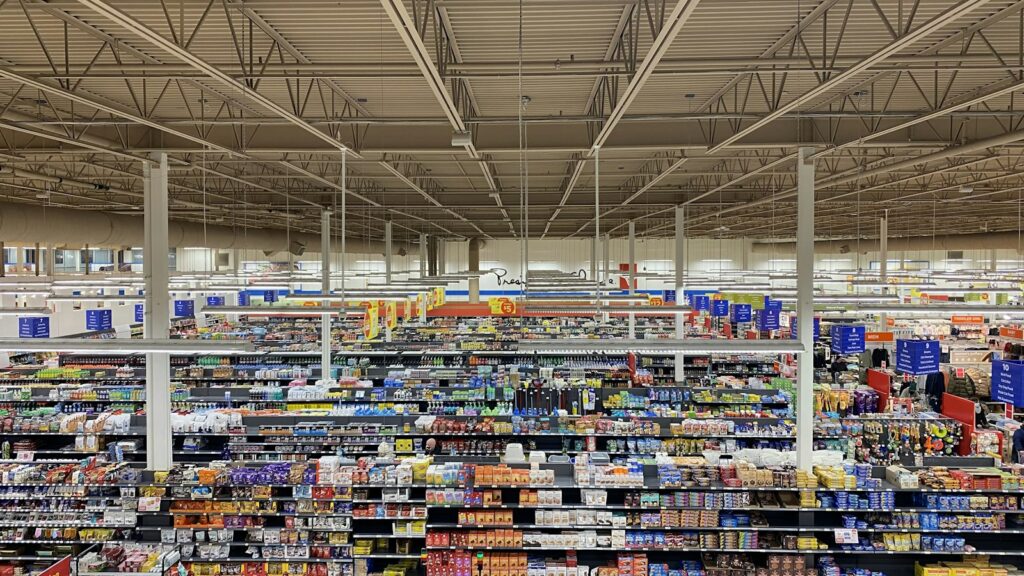
Sweden’s government expects further cyberattacks. Speaking at a press conference in Stockholm on Tuesday 10 November, Minister for Civil Defence Carl-Oskar Bohlin (Moderates) said there is a risk that the country will see more cyber incidents in the coming months. The main trigger was the attacks on refrigeration systems in grocery shops, in which fridges and freezers in Sweden were tampered with remotely at the start of November.
Government sees a worsening threat
Bohlin appeared alongside John Billow, head of the National Cyber Security Centre (Nationellt cybersäkerhetscenter, NCSC). According to the TT news agency, the minister said Russia is more willing to take risks than before and that the threat to Sweden continues to worsen. According to SVT, he pointed out that Russia has tried to carry out destructive cyberattacks against several countries, including Sweden.
Bohlin named artificial intelligence as a further factor that makes attacks easier. Billow added that AI has not invented entirely new methods of attack. Rather, long-known vulnerabilities can now be found and exploited at a speed and scale that was not previously possible.
Freezers at 50 degrees: what happened on 2 November
Overnight into Monday 2 November, refrigeration and freezer systems failed at supermarkets, picking warehouses and restaurants in Sweden. Shops belonging to ICA and Coop were among those affected. At an ICA shop in Sjöbo in southern Sweden, fridges and freezers were reportedly set to 50 degrees Celsius. According to SVT, food worth millions of kronor had to be thrown away. Bohlin spoke of around 30 affected shops in Sweden.
ICA said its own systems were not affected. The control system for the affected units came from an external supplier and ran on a network outside ICA’s central network. Coop described a cyber incident in which unauthorised parties had interfered with its refrigeration.
Perpetrators still unknown
Sweden is not an isolated case. According to the minister, similar attacks hit around 700 shops in France as well as shops in Finland, Estonia, Ireland, Belgium, Luxembourg and the Netherlands. The French government blames Iran for the attacks in France. Whether there is a link to the incidents in Sweden remains unclear.
According to Billow, it has not yet been established who was behind the Swedish attacks. The analysis is time-consuming and may not produce a complete picture. Pro-Russian groups have claimed responsibility for several of the attacks, but experts and SVT’s fact-checkers have questioned the evidence presented. The government did not announce any specific new laws or obligations for businesses at the press conference.
What this means for travellers and people in Sweden
- Shopping: The warmed-up goods were reportedly discarded in the affected shops. If you notice chilled products in a shop that feel noticeably warm, do not buy them and let the staff know.
- Paying: Everyday life in Sweden relies heavily on digital systems, including payments. Travellers should therefore carry a second card. Find out more in our guide Paying in Sweden: Cards, Cash and Swish.
- Devices at home: The NCSC advises organisations to list all internet-connected devices, assess whether each connection is necessary, and keep the remaining ones updated and protected by several layers of security. The same principle can be applied to routers, cameras and smart-home devices in a holiday cottage or flat.
- Official information: During major disruptions, Swedish authorities publish joint information on krisinformation.se, including in English.
Sources
- SVT Nyheter – Bohlin (M) håller pressträff om cybersäkerhet efter senaste tidens attacker (10 November 2026)
- Tidningen Näringslivet / TT – Bohlin: Kan vänta oss fler cyberangrepp (10 November 2026)
- Regeringen.se – Pressbriefing om cyberattacker (9 November 2026)
- The Hacker News – New Wave of Refrigeration Cyberattacks Hits Supermarkets Across Europe (3 November 2026)